“In the Fields of Human Endeavor are the Seeds of Creativity begging to be cultivated.” Ricky J. Fico
The High Renaissance Then and the Golden Renaissance Today
The High Renaissance was a brief, explosive window of peak artistic achievement in Italy—roughly spanning from 1490 to 1527. Think of it as the moment when everything the Early Renaissance had been trying to figure out (like linear perspective, realistic anatomy, and lighting) suddenly clicked into absolute mastery.
Instead of just capturing reality, High Renaissance artists wanted to perfect it. They focused on ideal beauty, monumental scale, and flawless symmetrical harmony.
If thee Renaissance was an explosion of genius, the Medici family was the fuel.
They weren't just wealthy fans of the arts; they operated a massive, multi-generational venture capital engine for human culture. By using their immense banking fortune to bankroll architects, scientists, and artists, this single Florentine family effectively shaped the visual identity of Western civilization.
1. The Startup Phase: Cosimo "The Elder" (1389–1464)
Cosimo laid the groundwork. As a brilliant banker, he understood that investing in public infrastructure bought political goodwill and cleaned up the family name (since banking interest was heavily frowned upon by the Church).
The Big Bets: He financed Brunelleschi to finish the legendary dome of the Florence Cathedral and backed Donatello’s revolutionary, edgy sculptures.
The Cultural Pivot: He founded the Platonic Academy, collecting and translating ancient Greek texts that had been lost to Western Europe for centuries. This single move ignited the intellectual movement of Humanism.
2. The Golden Age: Lorenzo "The Magnificent" (1449–1492)
Lorenzo didn't just buy art; he discovered and nurtured the talent. He turned Florence into a thriving incubator where artists, poets, and philosophers lived and worked together.
The Talent Pipeline: A young Michelangelo actually lived in Lorenzo’s palace, eating at his dinner table alongside the top intellectuals of the day. Lorenzo also kept Leonardo da Vinci and Sandro Botticelli constantly working on high-profile commissions.
The Strategy: Lorenzo used art as "soft power" diplomacy, sending his best artists to paint for rivals (like the Pope in Rome) to secure peace and cement Florence as the undisputed cultural capital.
3. The Enterprise Scale: The Medici Popes (1513–1534)
When the family was temporarily exiled from Florence, they pivoted to the ultimate seat of power: the Vatican. Two Medici popes—Leo X and Clement VII—took the family's patronage strategy to a global scale.
The High Renaissance Boom: They poured massive papal funds into Rome, hiring Raphael to paint the papal apartments and forcing Michelangelo to return to architecture and painting (including the Sistine Chapel's Last Judgment and the family's own tombs in Florence).
The Takeaway: The Medici understood a fundamental truth: political power fades, but cultural capital is permanent. By embedding their brand into the greatest masterpieces of the era, they ensured their family name would be remembered for half a millennium.
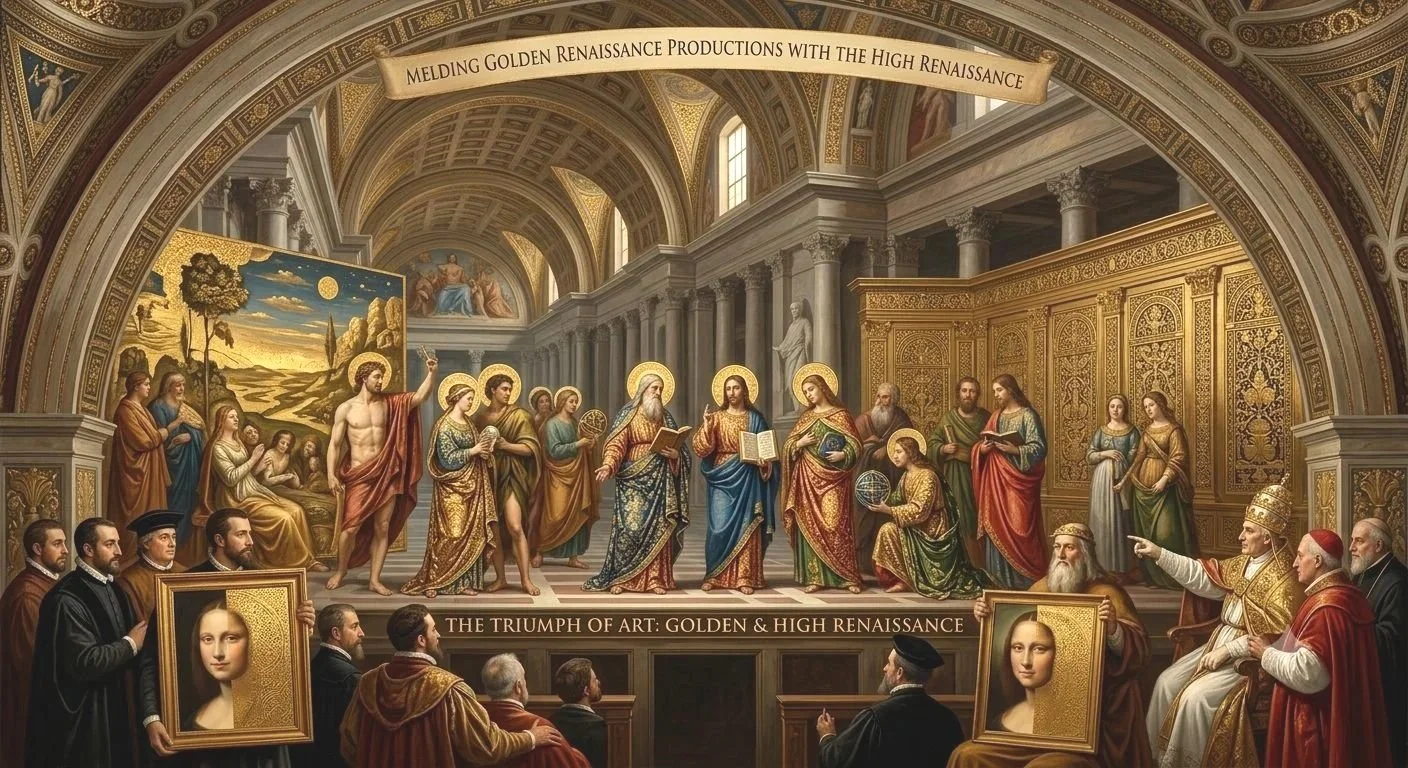
Today, Let’s Unite and Add Our Pens, Brushes, Voices & Instruments to the Forefront of Humanity and Celebrate not only Our Heritage but a more Harmonious Future. RJF
Golden Renaissance Productions (GRP) is more than a multimedia studio—it is a movement of mindful creation. Founded by Ricky J. Fico, GRP serves as a sanctuary for those who believe in the radical power of empathy, the necessity of social justice, the beauty of authentic storytelling whether through art, music, writing or performing.Operating at the intersection of Literature, Media, and Art, we are dedicated to building a world we can be proud of, one story and one gift at a time.
Click on the GoFundMe below! Or Scan the QR Code! I Thank you so very much!